When Speaking Up Comes at a Cost: The Hidden Governance Crisis in Charity Boardrooms
If you find this useful, I share practical tools and insights by email Sign up to the newsletter
A court case. A trustee. A question that cuts to the heart of how charities are actually governed.
Earlier this year, a legal dispute involving the British Psychological Society placed an uncomfortable spotlight on a gap many in the sector have long suspected but rarely named out loud. A trustee had raised concerns about governance. They argued those concerns deserved the same legal protection afforded to whistleblowers. The tribunal disagreed. Trustees, it ruled, are not legally "workers" — and therefore don't qualify for the same protections when they speak up.
The legal argument isn't finished. Appeals may follow, and the landscape could shift. But the case has already done something useful: it has forced a conversation that boards across the charity sector badly need to have.
Because the real question isn't just about legal definitions. It's about what happens — or more often, what doesn't happen — when a trustee decides to raise a concern.
The Law and Its Limits
To be clear: the tribunal's decision doesn't mean trustees have no protections whatsoever. Charities still have duties under the Equality Act, and individuals can still bring certain claims. But the ruling does highlight that the formal whistleblowing framework — which offers meaningful legal shelter to employees who report wrongdoing — doesn't automatically extend to volunteer trustees.
This matters because it reinforces something that was already true in practice: speaking up as a trustee carries real personal risk. Risk to relationships. Risk to reputation. Risk to your place in the room.
And if there's no legal safety net, the culture of a board becomes even more important. It may, in fact, be the only protection a trustee has.
Why People Stay Silent (And It's Not What You Think)
When governance fails, the post-mortem often focuses on what trustees didn't do. Why didn't they challenge the CEO's numbers? Why didn't anyone flag that conflict of interest? Why didn't someone just ask the obvious question?
The assumption is that silence reflects negligence — or worse, complicity.
But that's rarely what's actually happening. Most trustees who stay quiet in a boardroom aren't indifferent to the outcome. They're navigating something far more human.
They don't want to look like they've misunderstood something everyone else seems to grasp. They assume that the people who've been on the board longer — or who have a professional background in finance, law, or the relevant field — must already have thought this through. They don't want to slow things down, or seem like they're creating problems out of nothing. And they don't want to create friction in a room full of people they genuinely like and respect.
None of that is recklessness. It's the entirely normal social calculus that plays out in groups of well-meaning people who have been asked to work together in their own time, for free, because they care about a cause.
The trouble is, when everyone is quietly making that calculation, it tends to produce the same result: a meeting where things are approved without being tested, where concerns are swallowed rather than surfaced, and where the board doesn't actually do the thing it exists to do.
In Small Charities, the Pressure Is Even Greater
Across the sector, small and medium-sized charities face particular challenges here. And the dynamics in their boardrooms often differ sharply from those in larger organisations.
In a small charity, the trustees may have been friends before they were colleagues. Some may have helped found the organisation. Others joined because they believed in the work, or — let's be honest — because they believed in a particular person leading it. That personal loyalty is one of the sector's great strengths. It also makes scrutiny feel like criticism, and criticism feel like betrayal.
When the founding CEO presents a new strategy they're visibly excited about, it takes courage to be the person who says: have we really tested whether this is affordable? When a trustee who's given decades to an organisation proposes a significant change, it takes nerve to say: I'm not sure we've thought through the risks here.
It shouldn't take courage. But it does. And if a board hasn't actively built a culture where that kind of challenge is expected and welcomed, it won't happen naturally.
What Good Challenge Actually Looks Like
There's a persistent myth that robust governance requires a boardroom full of adversaries, or that good challenge means someone has to be difficult. It doesn't.
A board can be warm, collegial, and mutually supportive — and still ask hard questions. The two things are not in conflict. What matters is that certain questions are treated as normal, not threatening.
- Can we look at this again before we decide?
- What happens if this doesn't go the way we're hoping?
- I want to make sure I've understood this correctly — can you walk me through it?
- What are we not seeing here?
These aren't aggressive questions. They're the questions a good board asks as a matter of course. They're also the questions that, if unasked, allow poor decisions to compound quietly until they become crises.
The concept of "groupthink" — the tendency of cohesive groups to converge on consensus and suppress dissent — is well-documented in organisational psychology. It's particularly acute in settings where members feel strong social bonds, where there's an authority figure whose approval matters, and where the stakes feel too high to risk disruption. In other words: many charity boardrooms.
Naming groupthink isn't an accusation. It's a prompt. It's a reminder that even intelligent, well-intentioned people in groups can collectively arrive at decisions that none of them would endorse individually — if no one creates the space to think differently.
Silence Isn't Neutral
Here's the thing about boardroom silence: it feels safe. In the moment, keeping your concern to yourself avoids awkwardness, preserves relationships, and means the meeting ends on time.
But silence has consequences that play out much more slowly.
The decision that wasn't challenged gets implemented. The financial risk that wasn't examined materialises. The conflict of interest that no one named begins to shape decisions in ways that erode trust. And the culture that treated silence as the path of least resistance becomes harder and harder to shift.
Charities run on public trust. Donors, beneficiaries, regulators, and communities all operate on the assumption that the people responsible for an organisation are genuinely paying attention — not just lending their name to a letterhead. That responsibility sits with the board, individually and collectively.
Good governance isn't a committee document or a compliance checklist. It's a practice. It happens, or fails to happen, in the small moments: when someone decides whether to ask the question that's been nagging at them, or whether to let it go.
Building a Board That Can Speak Up
So what can boards actually do? A few things that tend to make a real difference:
Normalise dissent from the top. Chairs set the tone. If a chair actively invites challenge, thanks people for raising difficult points, and models intellectual humility themselves, it becomes easier for others to do the same.
Make space before the vote. Before any significant decision, build in time for a genuine "devil's advocate" moment — not as a bureaucratic exercise, but as a real invitation to surface concerns. What might we be missing? What would make us regret this?
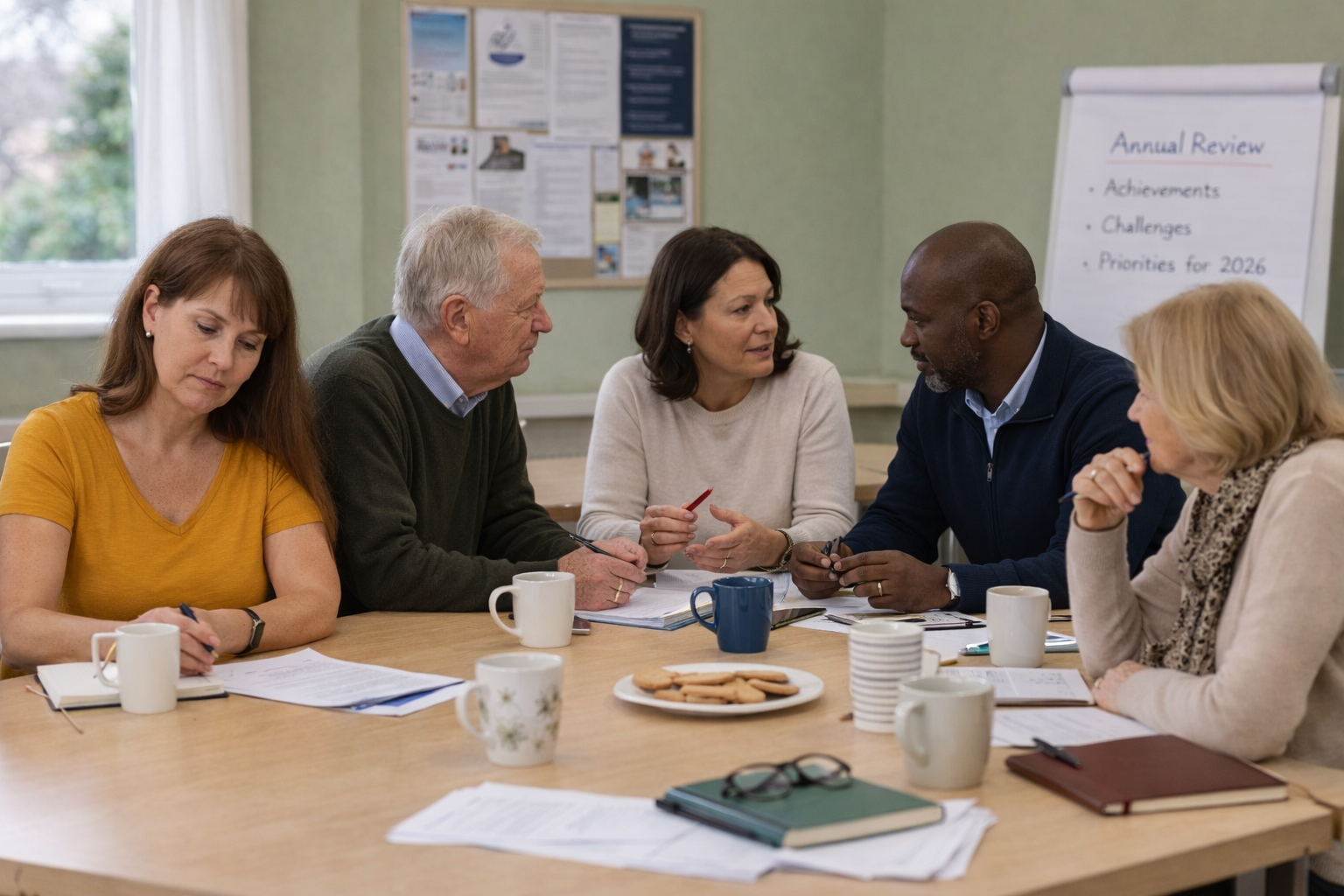
Check in on culture periodically. An annual board effectiveness review that includes honest reflection on whether people feel able to speak up — not just whether meetings are well-run — is worth the time.
Name the dynamic. Sometimes simply saying "I want to make sure we're not just nodding this through" is enough to give people permission to raise the thing they've been sitting on.
And perhaps most importantly: recognise that the trustee who asks the uncomfortable question isn't the problem. They're the asset.
The Bigger Picture
The BPS case may work its way through the courts. The law around trustee protections may eventually be clarified or reformed. Those are important conversations.
But boards shouldn't wait for legislative clarity before they examine their own culture. The legal framework matters, but culture is what determines, day to day, whether a board functions as genuine oversight or as a formality.
Every trustee who decides to stay quiet because the room doesn't feel safe for honest questions is a small failure of governance. Accumulated over time, those small failures become large ones.
Silence, as the saying goes, is a choice. In a boardroom, it's often the most consequential choice a trustee makes.
The question is whether your board makes it easy to choose differently. If this resonates and you'd like to think through your board's culture, get in touch
Want more like this? I send practical tools, funding ideas, and honest insights for small and medium charities straight to your inbox. Sign up to the newsletter